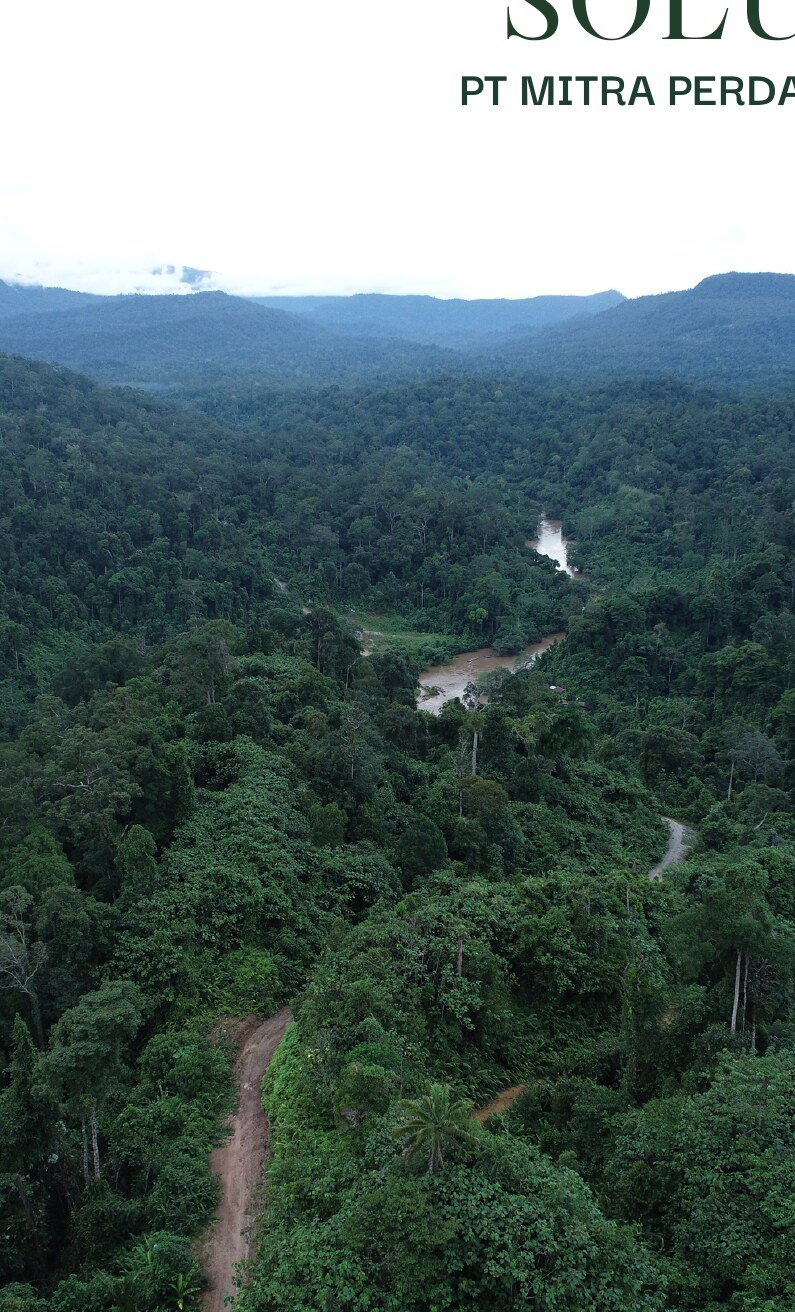
Mitra Perdana Palangka
Nature-Based Solution
A 56,000 ha forest concession in Murung Raya, Central Kalimantan — protecting orangutan habitat, the Busang river system, and Dayak Kaharingan heritage in the Heart of Borneo.
113°15'–114°08' E · 0°00'–0°30' N · MenLHK Concession Decree
56,000 ha
Concession Area
13.19M
tCO2e Total Reduction
26 yrs
Crediting Period
507,261
tCO2e Annual Average
A Forest Estate in the Heart of Borneo
The PT Mitra Perdana Palangka (MPP) concession spans 56,000 ha in Murung Raya Regency, Central Kalimantan, within the Heart of Borneo conservation landscape and the upper Barito River basin.
The forest estate was established under Ministry of Environment & Forestry Decree No. SK.1453/MENLHK/SETJEN/HPL.0/12/2021, across production, limited production, conversion, protection, and sanctuary forest functions (APL, HP, HPT, HPK, HL, KSA/KPA).
Like its sister concession, MPP sits on mineral soil ecosystems dominated by dystropepts and tropudults, straddling the equator across the Müller-Schwaner mountain foothills.
Mitigation actions combine reforestation, prevention of unplanned deforestation, and Reduced Impact Logging–Carbon (RIL-C) across a 26-year crediting period.
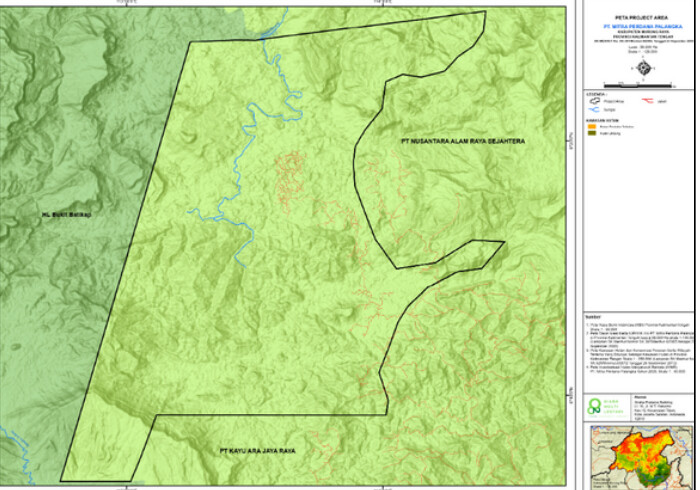
Peta project area — PT Mitra Perdana Palangka · Source: Kiara Multi Lestari project booklet (July 2024)
Forest Function Zones
- Area Penggunaan Lain (APL)
- Hutan Produksi (HP)
- Hutan Produksi Terbatas (HPT)
- Hutan Produksi Konversi (HPK)
- Hutan Lindung (HL)
- Kawasan Suaka Alam / Kawasan Pelestarian Alam (KSA/KPA)
Location Overview
Geographically located at 113°15'–114°08' East and 0°00'–0°30' North, straddling the equator, the concession shares the hilly topography of the Barito River basin. The Müller-Schwaner mountains to the north feed the Barito headwaters, placing MPP inside the world-renowned Heart of Borneo conservation landscape.
Emission Reductions Over 26 yrs of Crediting
Over 26 years, the MPP programme is estimated to deliver a total greenhouse gas emission reduction of 13,188,783.53 tCO2e — 10,243,598.32 tCO2e from reforestation and 2,945,185.21 tCO2e from preventing unplanned deforestation, with zero leakage emissions.
RIL-C harvesting operations contributed an estimated 1,452.38 tCO2e reduction in 2023.
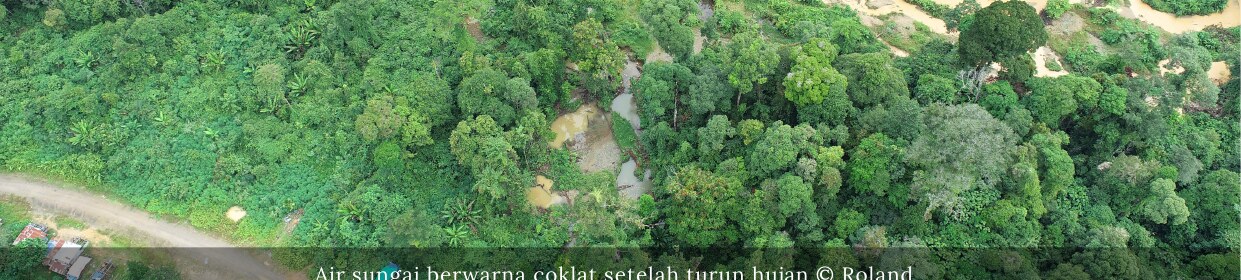
The Busang river runs chocolate-brown after rain © Roland / KML
13,188,784
tCO2e Total Reduction
10,243,598
tCO2e Reforestation
2,945,185
tCO2e Avoided Deforestation
1,452
tCO2e RIL-C (2023)
AR-ACM 003 (CDM)
Reforestation & planting activities
MSAH001 (Dirjen PPI)
Prevention of unplanned deforestation
SRN Indonesia
Registered with the National Registry System
Estimated Annual Emission Reductions (tCO2e)
| Year | Reforestation | Avoided Deforestation | Total |
|---|---|---|---|
| 1 | 1,449.20 | 124,712.45 | 126,161.65 |
| 2 | 4,704.36 | 123,797.56 | 128,501.92 |
| 3 | 9,796.88 | 122,882.67 | 132,679.55 |
| 26 | 920,272.58 | 101,840.26 | 1,022,112.84 |
| Annual avg. | 393,984.55 | 113,276.35 | 507,261 |
Selected years from the project booklet (Table 1); reductions ramp up as planting cohorts mature. Leakage emissions are estimated at zero throughout.
A Refuge for Borneo's Rare & Threatened Species
Inventory surveys recorded 139 plant species dominated by Dipterocarpaceae with 19 understory species, and a fauna assemblage of 25 mammal, 84 avifauna, and 54 reptile species — including the concession's flagship resident, the Bornean orangutan.
The concession holds High Conservation Values 1, 2, and 3, with rare and threatened ecosystems across the Beriwit (BRW), Lawanguwang (LWW), Maput (MPT), Pendreh (PDH), and Teweh ecoregions — including the rare Pendreh (PDH) class.
25
Mammal Species
84
Avifauna Species
139
Plant Species
IUCN Red List Flora
Shorea lamellata (Merjang / Sindur)
- Shorea laevis Ridl. (Bengkirai)
- Hopea myrtifolia (Haro)
- Cotylelobium lanceolatum (Luntang lahang)
- Shorea mecistopteryx Ridl. (Mohisap)
- Durio kutejensis (Pakon)
- Artocarpus anisophyllus (Puan)
- Eusideroxylon zwageri (Tobolion)
- Shorea smithiana Symington (Toi)
9 species are classified as threatened on the IUCN Red List.
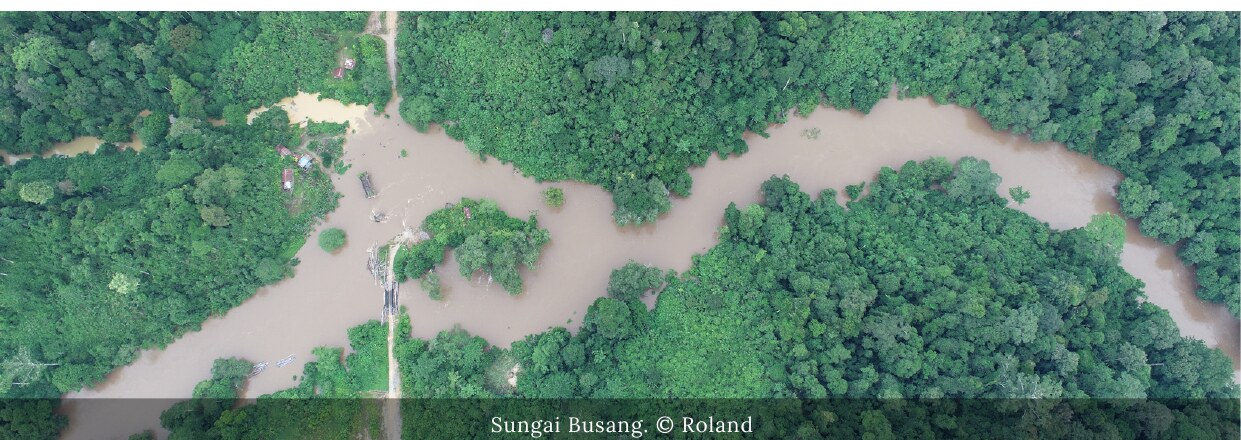
The Busang river, PT Mitra Perdana Palangka © Roland / KML
Field teams documented Xenochrophis trianguligerus snakes, musang civet tracks, Leptobrachella marmorata frogs, and Pitta nympha.
Species of Conservation Concern
| Group | Species | Scientific Name | IUCN |
|---|---|---|---|
| Mammal | Orang Utan Kalimantan | Pongo pygmaeus | CR |
| Mammal | Trenggiling | Manis javanica | CR |
| Reptile | Asian Giant Tortoise | Manouria emys | CR |
| Mammal | Monyet Ekor Panjang | Macaca fascicularis | EN |
| Mammal | Beruk | Macaca nemestrina | EN |
| Mammal | Owa Kalimantan | Hylobates muelleri | EN |
| Mammal | — | Cynogale bennettii | EN |
| Mammal | — | Prionailurus planiceps | EN |
| Bird | Cica-daun Besar | Chloropsis sonnerati | EN |
| Amphibian | — | Leptobrachella marmorata | EN |
| Mammal | Beruang Madu | Helarctos malayanus | VU |
| Mammal | Rusa unicolor | Rusa unicolor | VU |
| Mammal | Binturong | Arctictis binturong | VU |
| Mammal | — | Presbytis rubicunda | VU |
| Bird | Kangkareng Hitam | Anthracoceros malayanus | VU |
| Bird | Rangkong Badak | Buceros rhinoceros | VU |
| Bird | Julang Emas | Rhyticeros undulatus | VU |
| Bird | Bubut Teragop | Centropus rectunguis | VU |
| Bird | Kuau Raja | Argusianus argus | VU |
| Bird | — | Lophura ignita | VU |
| Bird | — | Pitta nympha | VU |
| Bird | — | Alophoixus tephrogenys | VU |
| Amphibian | Gunther's Borneo Frog | Meristogenys jerboa | VU |
Hunting Pressure
During the survey, the following species were caught by local communities hunting directly or with snares inside the project area — several of them Endangered or Critically Endangered on the IUCN Red List. The findings show hunting remains high and can disturb wild populations, especially rare and protected species.
- Galeopterus variegatus
- Manis javanica (CR)
- Presbytis rubicunda (VU)
- Cynogale bennettii (EN)
- Hemigalus derbyanus
- Viverra tangalunga
- Sus scrofa
- Tragulus napu
- Prionailurus bengalensis
- Prionailurus planiceps (EN)
- Macaca nemestrina (EN)
High Conservation Values
HCV 1 — Biodiversity
Areas supporting significant biodiversity: habitat-providing areas (NKT 1.1), rare, threatened & endangered species (NKT 1.2), viable populations of restricted-range species (NKT 1.3), and temporary-use areas (NKT 1.4).
NKT 1.1–1.4 Present
HCV 2 — Landscape-level Processes
Large natural landscapes maintaining ecological processes (NKT 2.1), contiguous multi-ecosystem mosaics (NKT 2.2), and representative natural species populations (NKT 2.3).
NKT 2.1–2.3 Present
HCV 3 — Rare Ecosystems
Rare and threatened ecosystems across five ecoregion classes — Beriwit (BRW), Lawanguwang (LWW), Maput (MPT), Pendreh (PDH), and Teweh — including the rare Pendreh (PDH) class.
Present
Watersheds, Livelihoods & Living Heritage
The concession holds High Conservation Values 4, 5, and 6 — watersheds, livelihoods, and living Dayak Kaharingan culture woven into the concession landscape.
Sungai Liyu Putih
A vital spring-fed river providing clean water sources for surrounding communities (HCV 4).
Perladangan Tradisional
Traditional agriculture continues using local seed varieties, involving all elements of the community (HCV 5).
Patung Patugur & Totem
The sacred Patugur statue crowns the Wara ritual guiding Kaharingan spirits to heaven, protected within a 100 m radius — alongside traditional totems trusted by local communities as sacred places (HCV 6).
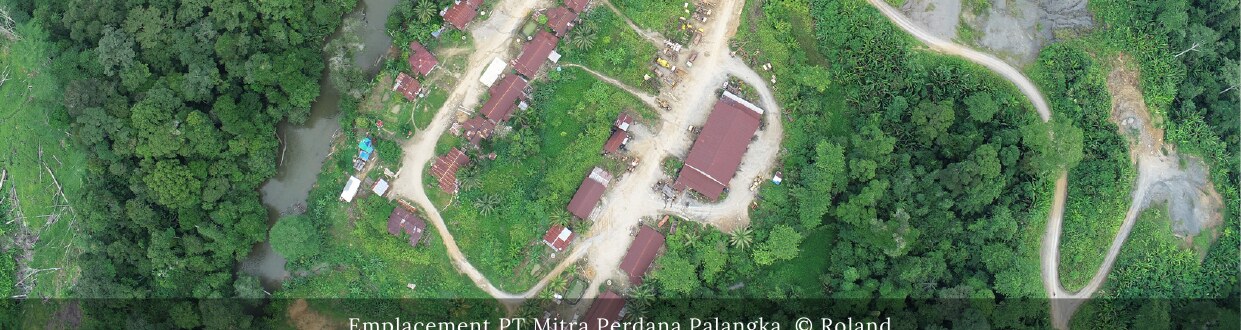
The PT Mitra Perdana Palangka emplacement © Roland / KML
Known Threats & Mitigation
Social studies identified illegal logging and illegal gold panning in villages across the concession — threats the project addresses through SOPs, protection patrols, and community alternative livelihoods.
Transparent Risks, Clear Mitigation
Risk analysis is included so the project owner fully considers and articulates project risks in a clear and transparent way — together with the proposed mitigations and their timing.
Lack of secure continuing financial resources until the project reaches cumulative break-even cash flow.
Secure external funding sources to carry the project through to cumulative cash-flow break-even.
Reduced liquidity or financial resources due to price variation of harvested timber.
Secure external funding sources to buffer timber price variation.
Climate change: prolonged dry seasons, rainfall variability, and water availability.
SOPs for climate-risk mitigation covering drought, rainfall variability, and water availability.
Exploitation of natural resources through illegal mining.
SOPs for handling illegal gold mining to prevent its spread across the concession.
Delay in reaching the project’s cumulative cash-flow break-even point.
Financial sensitivity analysis on inputs with the greatest influence on the break-even point.
Damage caused by forest fires.
SOPs for forest fire prevention and control.
Pests and diseases.
Pest and disease control and monitoring in line with company SOPs.
A Viable Conservation Economy
Projected net cash flow of Rp 564,393,012,720 over the remaining licence period. With a benefit-cost ratio above 2, the MPP carbon programme is economically viable.
30.15%
IRR
2.15
Benefit-Cost Ratio
7 years
Payback Period
Rp 564.39 billion
Projected Net Cash Flow
Contributing to the Global Goals
The programme contributes to the United Nations Sustainable Development Goals through local employment, education, gender equality, community funds, climate action, and ecosystem restoration.
No Poverty
Employment opportunities for local communities across project implementation, coordination, and monitoring activities.
Quality Education
Workers and community members gain education and training through project field activities.
Gender Equality
Social equality through mainstreaming gender across all project activities, free from discrimination.
Decent Work & Economic Growth
Improved community welfare through the Community Clean Land Fund (PLKC) managed by communities around the forest.
Climate Action
Reducing greenhouse gas emissions while improving ecological quality through environmental education and awareness.
Life on Land
Restoring ecosystems and wildlife habitat through sustainable forest management, improving the quality and quantity of vegetation.
Partner With Us for
Lasting Climate Impact.
The market is moving beyond volume. Leading organizations increasingly prioritize high integrity, transparency, community outcomes, and biodiversity co-benefits. KALYRA is being developed with these expectations in mind.